A Complete Parent’s Guide to Understanding the Early Signs of Puberty
Introduction
Watching your daughter grow is an exciting journey, and one of the biggest milestones during puberty is her first menstrual period, also known as menarche. While every child develops at her own pace, recognizing the early signs can help parents prepare their daughters emotionally and physically.
Most girls get their first period between 10 and 15 years of age, with the average age being around 12 years. Understanding the changes that happen before the first period allows parents to have open conversations, reduce anxiety, and ensure their daughter feels confident and supported.
In this guide, we’ll explore the common signs that your daughter’s first period may be approaching.
What Is a First Period (Menarche)?
Menarche is the first menstrual period and marks an important stage in puberty. It means the reproductive system is developing normally. However, having the first period does not necessarily mean a girl is fully grown or emotionally mature.
Every girl’s body develops differently, so there is no “perfect” age for a first period.
10 Signs Your Daughter May Get Her First Period Soon
1. Breast Development
Breast budding is usually the first visible sign of puberty. Small, tender lumps develop under the nipples.
Typically, girls get their first period 2 to 3 years after breast development begins.
2. Growth Spurt
Your daughter may suddenly become taller over several months.
This rapid growth usually happens just before menstruation begins.
Signs include:
- Rapid increase in height
- Larger shoe size
- Increased appetite
3. Pubic Hair Growth
Hair begins to appear around the pubic area and under the arms.
Initially soft and light, it gradually becomes thicker and darker.
4. White Vaginal Discharge
One of the clearest signs that a first period is approaching is a white or clear vaginal discharge.
This discharge:
- Is completely normal
- Helps keep the vagina healthy
- Often starts 6–12 months before the first period
Parents should reassure their daughters that this is a healthy part of growing up.
5. Body Odor Changes
As sweat glands become more active, your daughter may develop stronger body odor.
Daily bathing and the use of a gentle deodorant can help maintain hygiene.
6. Mild Acne or Oily Skin
Hormonal changes increase oil production.
Your daughter may notice:
- Pimples
- Oily forehead
- Small breakouts around the nose and chin
A simple skincare routine is usually enough.
7. Mood Swings
Hormones can affect emotions before menstruation begins.
Your daughter may become:
- More emotional
- Easily irritated
- Sensitive
- Anxious
Offer reassurance and encourage open conversations.
8. Mild Cramps
Some girls experience mild lower abdominal discomfort before their first period.
These cramps are generally light and temporary.
9. Hip and Body Shape Changes
During puberty, the body naturally becomes more feminine.
Common changes include:
- Wider hips
- Increased body fat around thighs and hips
- Curvier body shape
These changes are completely normal.
10. Interest in Privacy
As girls mature, they often become more aware of their changing bodies and may seek more privacy.
Parents should respect this while keeping communication open.
How to Prepare Your Daughter for Her First Period
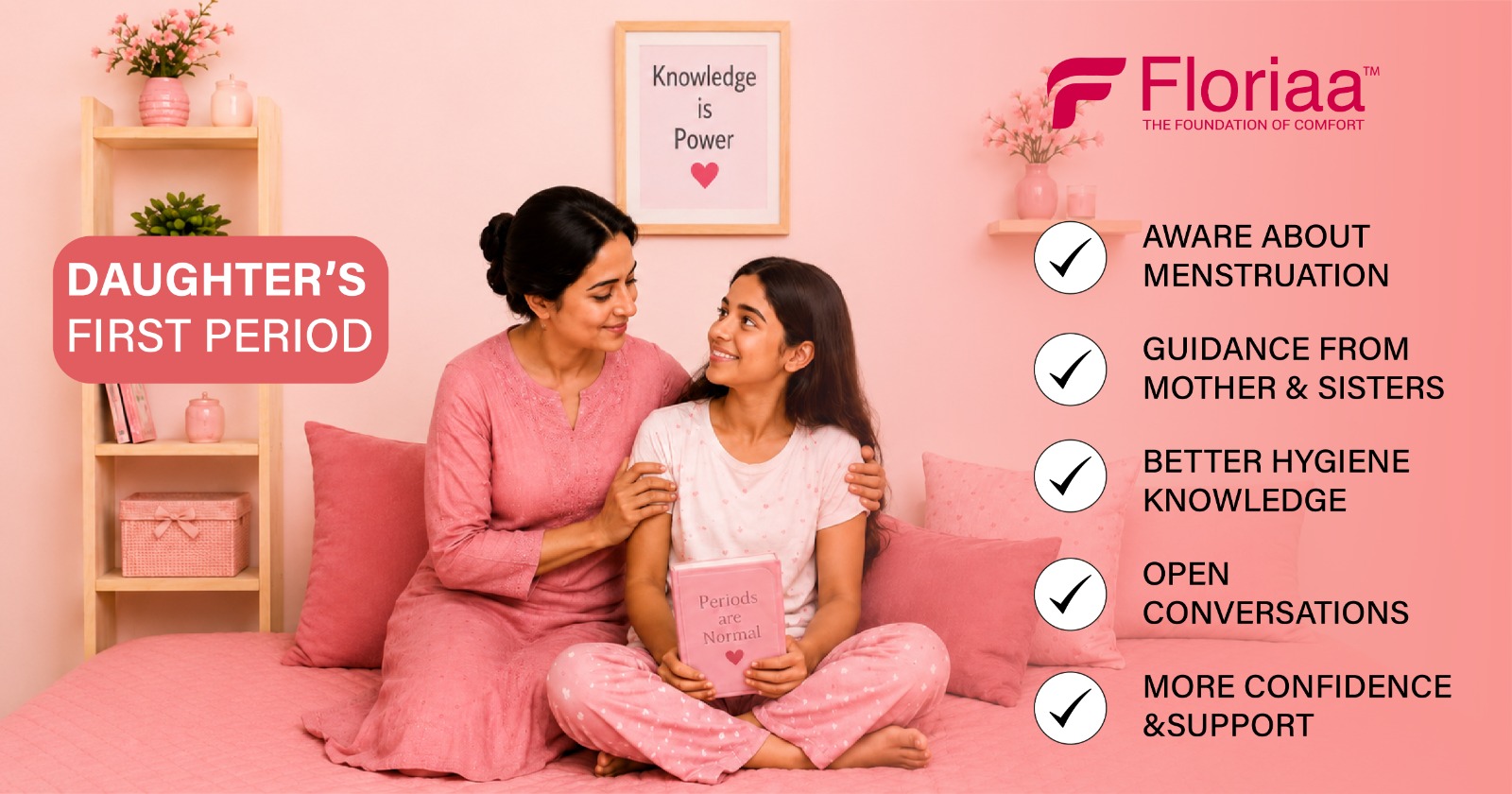
Preparation helps reduce fear and confusion.
Talk openly about:
- What a period is
- Why periods happen
- How long periods usually last
- How to use sanitary pads
- Basic menstrual hygiene
- Tracking periods on a calendar
Avoid making periods seem scary or embarrassing.
Create a First Period Kit
A small emergency kit can help your daughter feel confident at school or while traveling.
Include:
- Sanitary pads
- Extra underwear
- Wet wipes
- Small pouch
- Disposable bag
- Hand sanitizer
What Is Normal During the First Year?
The first year after menarche is often irregular.
Periods may:
- Come early or late
- Be light or heavy
- Last 2–7 days
- Skip a month occasionally
This is usually normal while hormones are adjusting.
When Should You See a Doctor?
Consult a healthcare professional if:
- Periods begin before age 8
- No period by age 15
- Severe pain prevents daily activities
- Very heavy bleeding
- Bleeding lasts longer than 7 days
- Fainting or dizziness occurs
How Parents Can Support Their Daughter
The way parents respond greatly affects a girl’s confidence.
Helpful tips include:
- Stay calm and positive.
- Answer questions honestly.
- Normalize menstruation as a healthy part of life.
- Encourage good hygiene.
- Teach proper pad changing habits.
- Respect privacy while offering support.
Frequently Asked Questions (FAQs)
At what age do most girls get their first period?
Most girls start menstruating between 10 and 15 years, with the average age being around 12 years.
Is white discharge before a period normal?
Yes. White or clear vaginal discharge is a common sign that puberty is progressing and often appears several months before the first period.
How long does the first period last?
The first period usually lasts 2 to 7 days, though every girl is different.
Are irregular periods normal after the first period?
Yes. It can take 1–2 years for menstrual cycles to become regular.
Should my daughter use pads or tampons?
For beginners, sanitary pads are often the easiest and most comfortable option.
Final Thoughts
Recognizing the signs your daughter may get her first period soon allows you to prepare her with confidence instead of uncertainty. Puberty is a natural stage of growth, and with honest conversations, proper education, and emotional support, your daughter can approach this milestone feeling informed and empowered.
Remember, every girl develops at her own pace. The most important thing is creating a safe and supportive environment where she feels comfortable asking questions and taking care of her menstrual health.


 11Jun
11Jun



Comments are closed